 Orqonix
Review the current revision
Tie checks, reviews and artifacts to the exact commit. A stale approval cannot silently apply to a newer SHA, and points remain a team-planning measure.
Sprint planning, pull requests, checks, release gates and incident response—with current commit evidence and provider-confirmed outcomes.
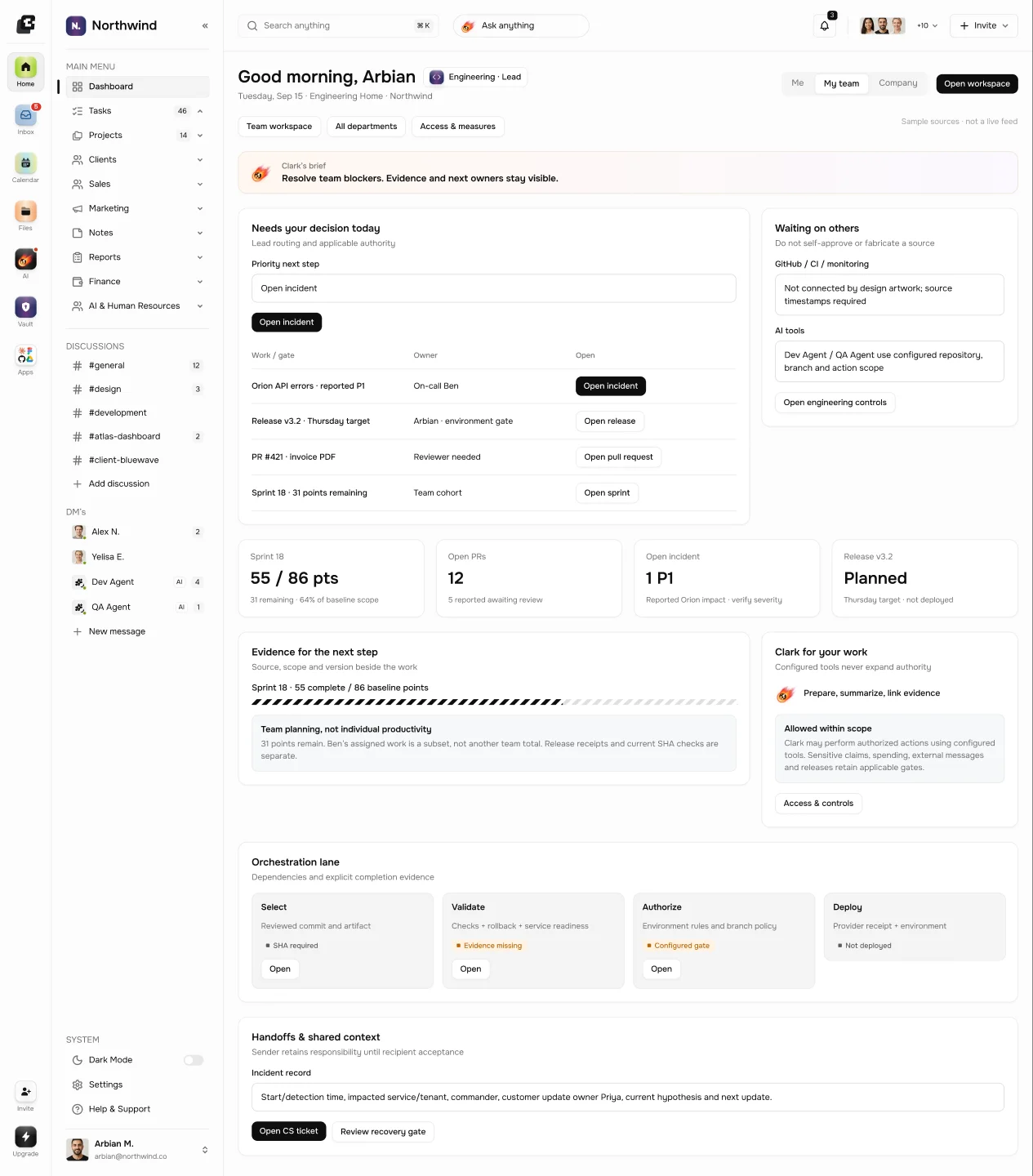
Actual product design · Engineering · Pre-launch preview
Sprint planning, pull requests, checks, release gates and incident response—with current commit evidence and provider-confirmed outcomes. The workspace is being designed to share context with the rest of the company, not simply sit next to it.
Tie checks, reviews and artifacts to the exact commit. A stale approval cannot silently apply to a newer SHA, and points remain a team-planning measure.
Check policy, reviewers, rollback readiness and provider receipts. A merged pull request is not a deployed release.
Link incident evidence to Customer Success updates. Confirm restoration and keep the previous timeline; do not manufacture service recovery or a resolution time.
Shared issue → reviewed commit → validated artifact → authorized deployment → service evidence → CS customer update.
These are designed workflows, not a claim that live services are connected.
Product screens show illustrative Northwind records. Reporting needs verified sources and aligned periods. Provider outcomes and permissions must be enforced by the runtime.
Prepare permitted issue, review, release and incident context. Dev Agent and QA Agent operate in configured repository and branch scope; no tool expands merge, deploy or secret authority.
Explore Clark & AI roles ↗Draft, summarize and link evidence from the records you can access.
Allowed actions can use configured tools. Permissions and suppression are checked at execution—not just in the interface.
Preserve revisions and receipts. Reconcile unknown outcomes before retrying; never display a fake success.
Different responsibilities. The same company context.
Join for early-access updates.
Help shape what comes next.